Insights
What Is Anti-Fatigue Matting? How It Works and What It's Made Of
Anti-fatigue matting is a cushioned floor mat for people who stand to work. How it reduces leg and back fatigue, the materials used, thickness, and how to tell a real one from a kitchen rug.
- anti-fatigue
- explainer
- materials
- buying guide
The Short Answer
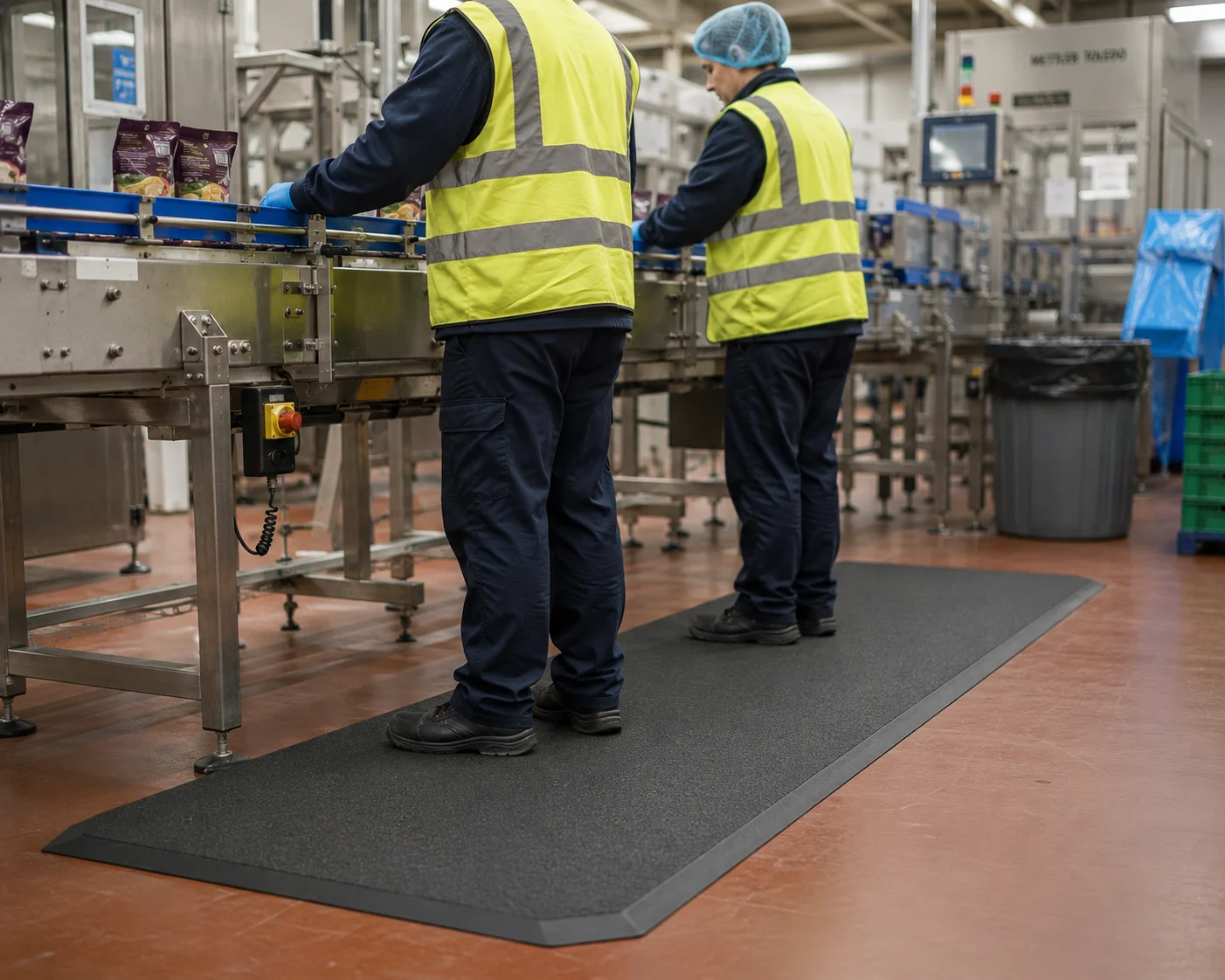
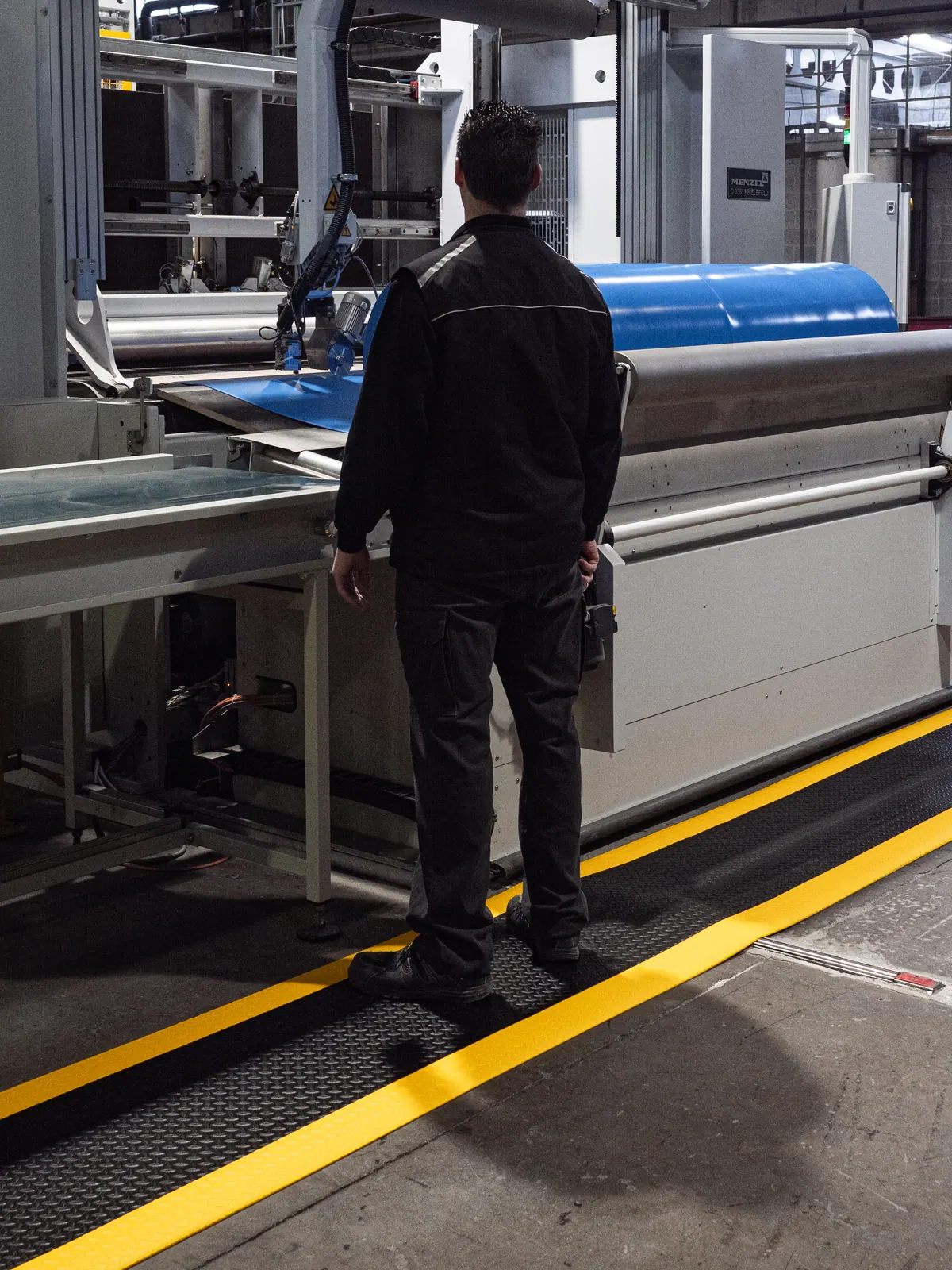
Anti-fatigue matting is a cushioned mat laid where people stand to work: at a production line, a packing bench, a till, a kitchen pass or a standing desk. It gives slightly underfoot, so the muscles in the legs and feet keep making small adjustments instead of locking still. That reduces the tiredness, aching and discomfort that come from standing on a hard floor for hours.
It is not a carpet and it is not an entrance mat. Those are made to catch dirt. An anti-fatigue mat is made to be stood on, in one place, all shift.
Why Standing Still Is Tiring
Walking is easy on the body. Standing still is not. When you stand in one spot, the muscles in your calves, thighs and lower back hold a steady, low-level contraction to keep you upright. Muscles that stay contracted get less blood flow, and that is when legs start to feel heavy and the lower back starts to ache.
A concrete floor makes it worse. It does not give at all, so the pressure on your heels and the balls of your feet never changes. Most people deal with it by shifting from foot to foot, which helps for a while.
How an Anti-Fatigue Mat Helps
A good mat does two things.
- It spreads the pressure. The cushioning spreads your weight across more of the sole of your foot, so less of it sits on the heel.
- It makes you move without thinking about it. The surface gives slightly and springs back. Your body keeps making tiny balance corrections, and those small movements keep the muscles working and the blood moving.
The second point is why softer is not always better. A mat that is too soft lets you sink in, and your muscles work harder to keep you stable. The goal is a surface that gives a little and pushes back, which is what “bounce-back” or “resilience” means on a spec sheet.
Mats also take the chill off a cold floor, and on a hard floor they reduce the damage when someone drops a tool or a part.
What Anti-Fatigue Mats Are Made Of
The material decides how long the mat lasts, where it can go, and how it feels.
| Material | Feel | Good for | Watch out for |
|---|---|---|---|
| PVC or vinyl foam | Soft to medium | Dry workstations, counters, offices | Breaks down with oil and solvents |
| Resilient or high-density foam (as in M1 and M2) | Springy, even | Dry production lines and benches | Not for oily floors or cold stores |
| Nitrile rubber | Firm, dense | Oily workshops, machining, kitchens with fat | Heavier and dearer |
| Natural rubber | Firm, grippy | Dry, heavy-duty areas | Degrades with oil and grease |
| Polyurethane (PU) | Soft, plush | Standing desks, retail, hospitality | Can be dented by sharp heels and dropped tools |
| Interlocking tiles | Firm with give | Any footprint, wet or oily zones with drainage tiles | Needs edging on exposed sides |
For a closer look at the two most common choices, see rubber vs PVC anti-fatigue mats.
How Thick Should It Be?
For most standing work, between 9 mm and 25 mm.
- Around 10 mm suits part-shift standing, counters and sit-stand desks. Our M1 is 9.5 mm.
- Around 13 mm suits full 8-hour shifts on a production line. Our M2 is 13 mm.
- 20 to 25 mm suits heavy industrial work, and floors where you want drainage underneath. Our M5 tiles are 25 mm.
Thicker is not automatically better. What matters is that the mat does not flatten under the person standing on it after a few months. The anti-fatigue mat thickness guide covers this in more depth.
Mats, Rolls and Tiles
Anti-fatigue matting comes in three formats.
- Single mats in fixed sizes, for one person at one workstation.
- Rolls, usually 18 m or so long, for a continuous run along a line or bench. They can also be bought cut to length. See anti-fatigue matting rolls for sizes and prices.
- Interlocking tiles that click together to cover any shape, and can be lifted out one at a time when one wears.
How to Spot a Real Anti-Fatigue Mat
Plenty of cheap mats are sold as “anti-fatigue”. A few quick checks:
- Press your thumb into it and let go. It should push back straight away. If the dent stays, it will flatten in weeks.
- Look at the edges. A workplace mat should have bevelled edges that slope down to the floor, so nobody trips and trolley wheels roll over.
- Check the underside. It should grip the floor without sliding, and not be a thin layer of foam glued to a fabric back.
- Ask for the spec. A proper supplier can tell you the thickness, the material, the slip rating and how many hours of standing it is designed for.
If you are weighing a cheap mat against a better one, is an £80 anti-fatigue mat worth it? compares what you get at each price.
Do You Have to Provide Them?
No UK regulation says “you must provide anti-fatigue mats”. But employers do have to assess risks to staff, and prolonged standing is one of them. Where the job cannot be done sitting down, matting is one of the simplest control measures. Our guide to anti-fatigue matting and HSE requirements explains where it fits.
Key Points
- Anti-fatigue matting is a cushioned mat for people who stand to work. It reduces leg, foot and back fatigue by spreading pressure and encouraging small movements.
- Resilience matters more than softness. A mat that sinks or stays dented is doing little.
- Choose the material by what ends up on the floor: foam or PVC for dry areas, nitrile rubber or tiles for oil and water.
- Choose the thickness by how long people stand: around 10 mm for part shifts, 13 mm or more for full shifts.
Browse our anti-fatigue matting range, or order free samples to stand on before you buy.