Insights
How to Keep Warehouse Workers Warm Without Heating the Whole Building
Practical ways to keep warehouse, loading bay and production staff warm in winter without paying to heat a building that never feels warm: radiant heat at the workstation, floor insulation, draught control and better rotas.
- m-heat
- warehouse
- winter
- workplace temperature
The Short Answer
Stop trying to warm the air and warm the people instead. In a tall, draughty warehouse, space heating spends most of its energy on air that rises into the roof or leaves through the dock doors. The workers who feel the cold most are the ones standing still at a fixed workstation, so that is where the heat should go.
The most effective combination for most sites is:
- Radiant heat at the workstation, such as a heated standing mat or overhead infrared panel, so the heat reaches the person directly.
- Insulation from the floor, because cold concrete draws heat out through the feet all shift.
- Draught control at the doors, which is where most of a warehouse’s warmth is lost.
- Rotas, breaks and clothing that recognise some roles get colder than others.
Why Warehouses Are So Hard to Heat
Warehouses combine three things that defeat ordinary heating:
- Height. Warm air rises. In a building with a 10 metre roof, the warmest air sits well above anyone’s head.
- Air changes. Every time a dock door opens, the heated air inside is swapped for cold air outside. On a busy goods-in, that happens all day.
- Cold floors. A concrete slab stays cold through the winter and keeps drawing heat from anyone standing on it.
So a site can run large heaters for the whole shift and still have staff at the packing benches in coats and gloves. The energy is real; it just isn’t arriving where people are.
Who Gets Coldest
Movement generates heat. A forklift driver or picker covering the floor stays warmer than someone who stands in one place. The roles that need the most help are usually:
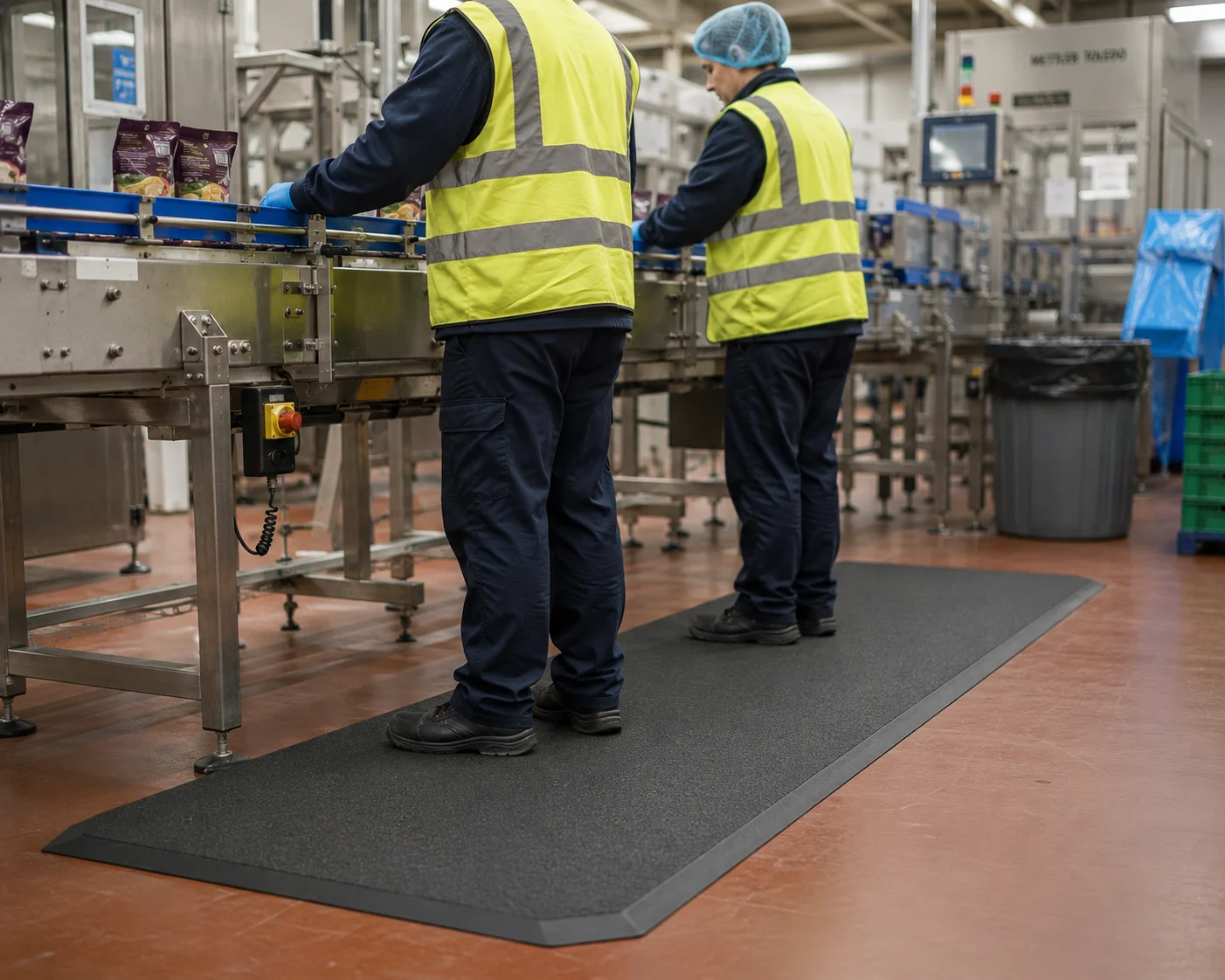
- packers and pick-face operators at fixed benches;
- goods-in and despatch staff beside open doors;
- quality, inspection and returns stations;
- assembly and line operators in large production halls.
These are fixed positions, which makes them easy to target with local heating instead of heating the whole building around them.
1. Put Radiant Heat Where People Stand
Radiant heat (far-infrared) warms people and surfaces directly rather than the air. That is why you feel warm in winter sunshine even when the air is cold. It suits warehouses because it does not depend on keeping warm air in place.
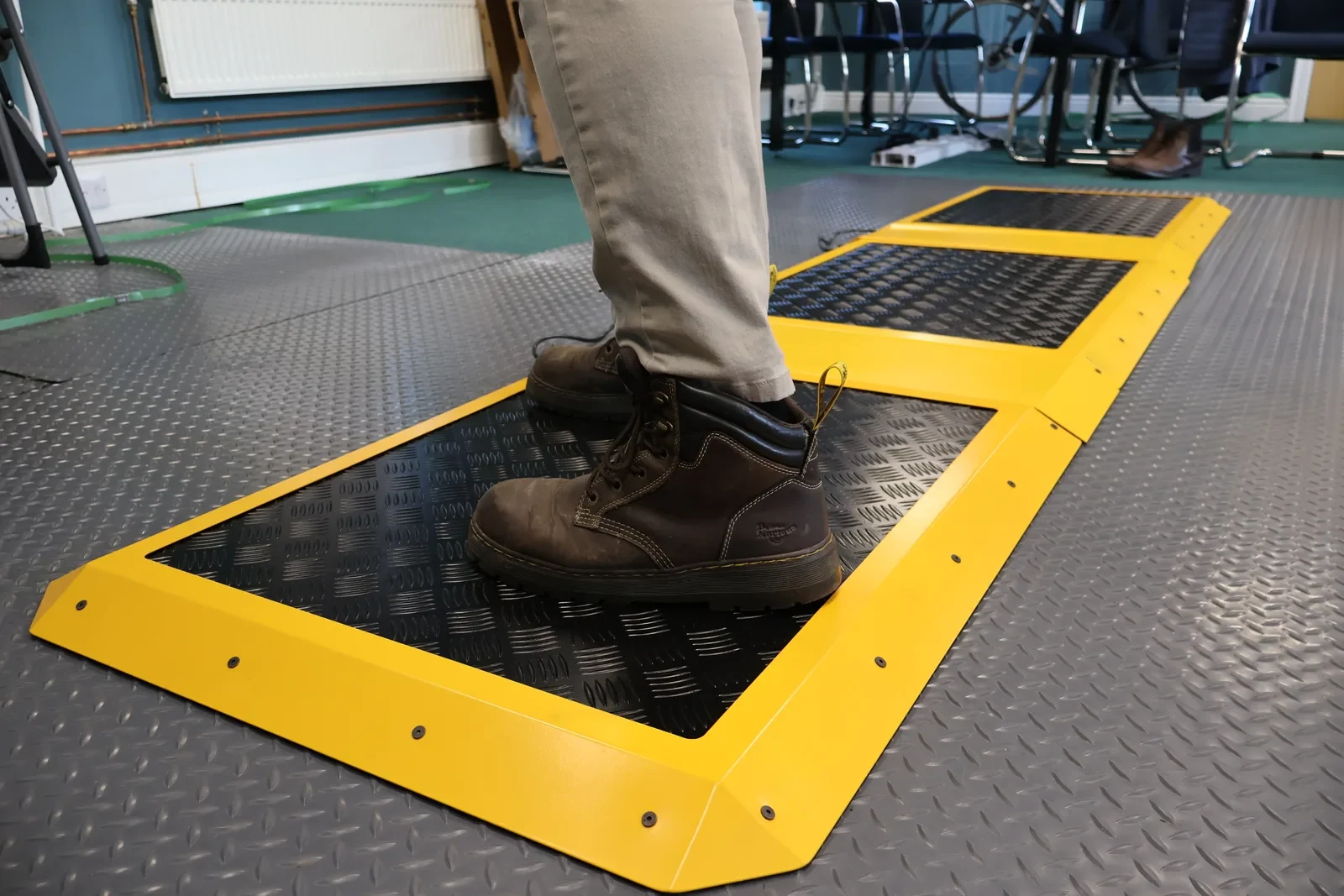
A heated standing mat puts that heat underfoot at a fixed workstation. Our M-Heat heated mat draws a maximum of 350 W and regulates its surface to 60 °C, against 2 to 3 kW for a typical local fan or convector heater. Up to five mats link from one standard socket, so a whole packing line can run without a mess of trailing leads.
The saving only exists where the mat lets you switch something else off. Compared with an equivalent 2 kW local heater over an eight-hour shift, the difference adds up across a year. You can work out the figures for your own tariff and shift pattern before you spend anything.
Overhead infrared panels are the other main option. They cover a larger area but need mounting and a fixed electrical supply, and they are less effective where staff move in and out of their footprint.
2. Insulate Workers From the Floor
Even without heat, getting people off bare concrete makes a noticeable difference. A raised anti-fatigue mat puts a layer between the worker and the slab, which reduces heat loss through the feet and eases the strain of standing all shift.
For cold storage and chilled areas, choose matting rated for low temperatures, because some materials stiffen and crack in the cold. Our guide to the best anti-fatigue mats for cold storage covers which materials hold up.
3. Control Draughts at the Doors
Most of a warehouse’s heat loss happens at the loading bays. The cheapest improvements usually come first:
- keep dock doors closed when no vehicle is at the bay;
- fit strip curtains or rapid-roll doors on doors that open frequently;
- seal dock shelters around trailers;
- move the coldest fixed workstations away from door lines where the layout allows.
4. Rotas, Breaks and Clothing
Local heat works best alongside sensible management of exposure:
- rotate staff between cold, static roles and more active ones;
- provide a warm area for breaks and hot drinks;
- supply suitable insulated workwear, gloves and thermal footwear where the work allows;
- ask staff where they are coldest. They will usually tell you exactly which benches need attention.
What the Law Expects
In Great Britain, workplace temperatures must be reasonable, and official guidance suggests at least 16 °C, or 13 °C where work involves severe physical effort. Where that is not practical, employers are expected to do what is reasonably practicable to keep workers warm, including local heating at workstations. Our guide to the minimum workplace temperature in the UK explains what applies.
Where to Start
Walk the site on a cold morning and note every fixed workstation where people stand for most of the shift. Those positions are where local heat pays back fastest. If you are equipping more than a handful, send us your layout and we will quote a full line, or start with one M-Heat mat at your coldest bench.