Insights
Minimum Workplace Temperature UK: What the Law Says for Cold Warehouses
Is there a legal minimum working temperature in the UK? What the Workplace Regulations and HSE guidance say about 16 °C and 13 °C, what applies in cold warehouses and cold stores, and practical steps employers can take.
- workplace temperature
- regulations
- winter
- m-heat
The Short Answer
There is no fixed legal minimum temperature written into UK law. In Great Britain, the Workplace (Health, Safety and Welfare) Regulations 1992 require the temperature in indoor workplaces to be reasonable during working hours. The Approved Code of Practice that goes with them says that should normally be at least 16 °C, or at least 13 °C where much of the work involves severe physical effort.
Where those temperatures cannot reasonably be achieved, for example in a cold store or a building that is open to the outside, employers are still expected to do what is reasonably practicable to keep workers warm.
This article is a general guide, not legal advice. Check the current HSE guidance for your situation.
What the Regulations Say
Regulation 7 of the Workplace (Health, Safety and Welfare) Regulations 1992 covers temperature in indoor workplaces. In summary:
- the temperature during working hours must be reasonable;
- heating or cooling methods must not give off fumes or gases that are likely to be harmful or offensive; and
- enough thermometers must be provided so that people at work can check the temperature.
The figures most people quote come from the Approved Code of Practice (L24), which gives practical guidance on meeting the regulations:
| Type of work | Guidance minimum |
|---|---|
| Most indoor work | 16 °C |
| Work involving severe physical effort | 13 °C |
Following the Approved Code of Practice is not compulsory, but an employer who does not follow it would need to show they have complied with the law in another way.
Northern Ireland has its own equivalent regulations with similar requirements.
What If a Warehouse Can’t Reach 16 °C?
Many warehouses, loading bays and production halls simply cannot be heated to 16 °C at a sensible cost, and some, like cold stores, must stay cold by design. The guidance recognises this. Where a reasonable temperature cannot be maintained throughout the workplace, employers should take reasonably practicable steps to keep workers as comfortable as possible, such as:
- providing local heating at workstations;
- reducing draughts and insulating hot or cold surfaces;
- providing suitable protective clothing;
- arranging work to limit time spent in the coldest areas, with job rotation where possible; and
- providing warm rest areas for breaks.
A thermometer reading of 16 °C in the middle of the floor also means little to someone standing at a packing bench beside an open dock door. What matters is the conditions at the place where people actually work.
Risk Assessment
Cold is a workplace hazard like any other. The Management of Health and Safety at Work Regulations 1999 require employers to assess risks to their staff, and cold working conditions should be part of that assessment. Pay particular attention to:
- static roles at fixed workstations, which get colder than active ones;
- workstations near loading bays and external doors;
- chilled and cold storage areas; and
- staff who may be more vulnerable to cold, such as older workers or those with relevant health conditions.
Practical Ways to Keep Workers Warm
The cheapest effective measure is usually to heat the person rather than the building. Radiant heat at fixed workstations reaches workers directly, while warm air in a tall, draughty building rises away from them.
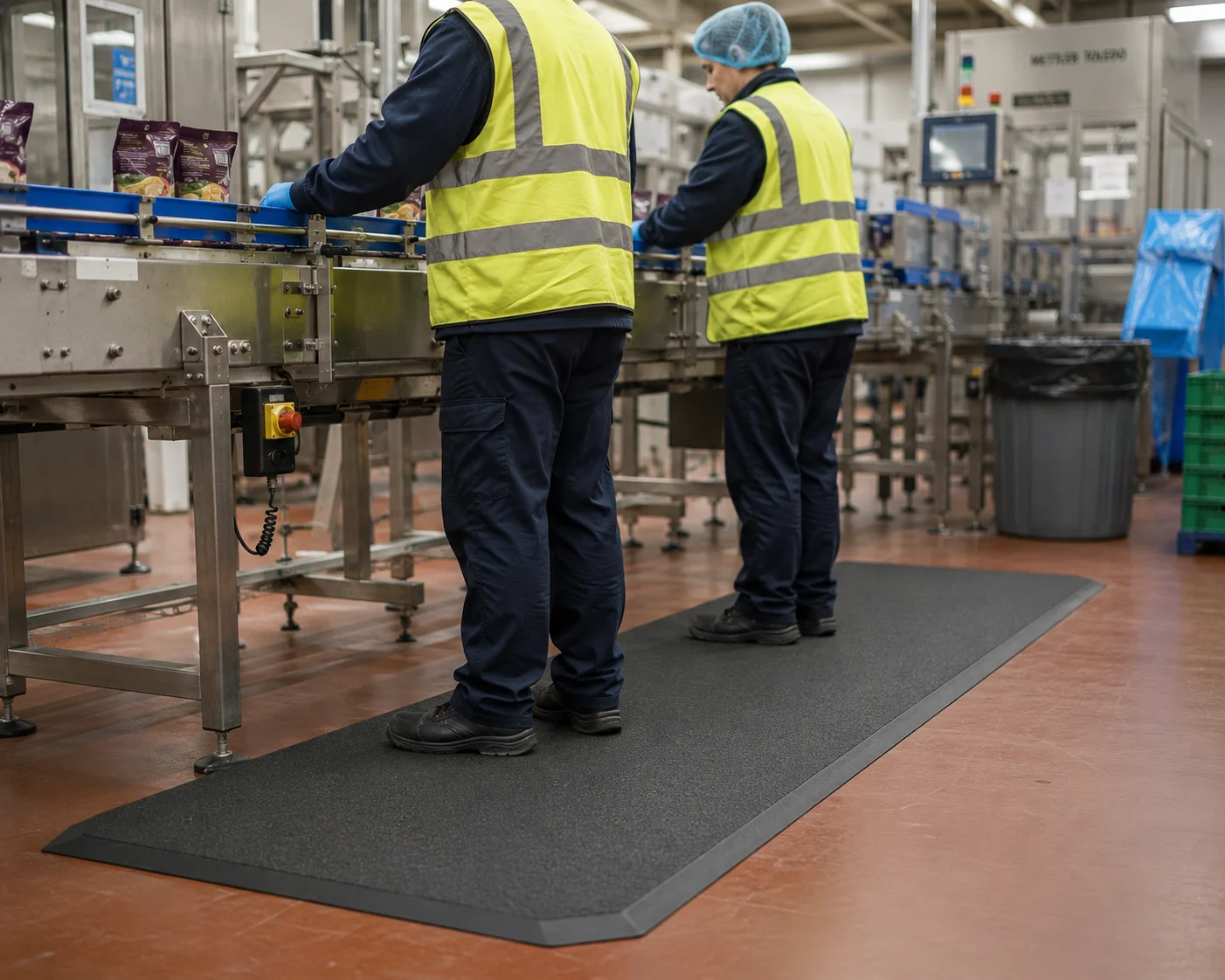
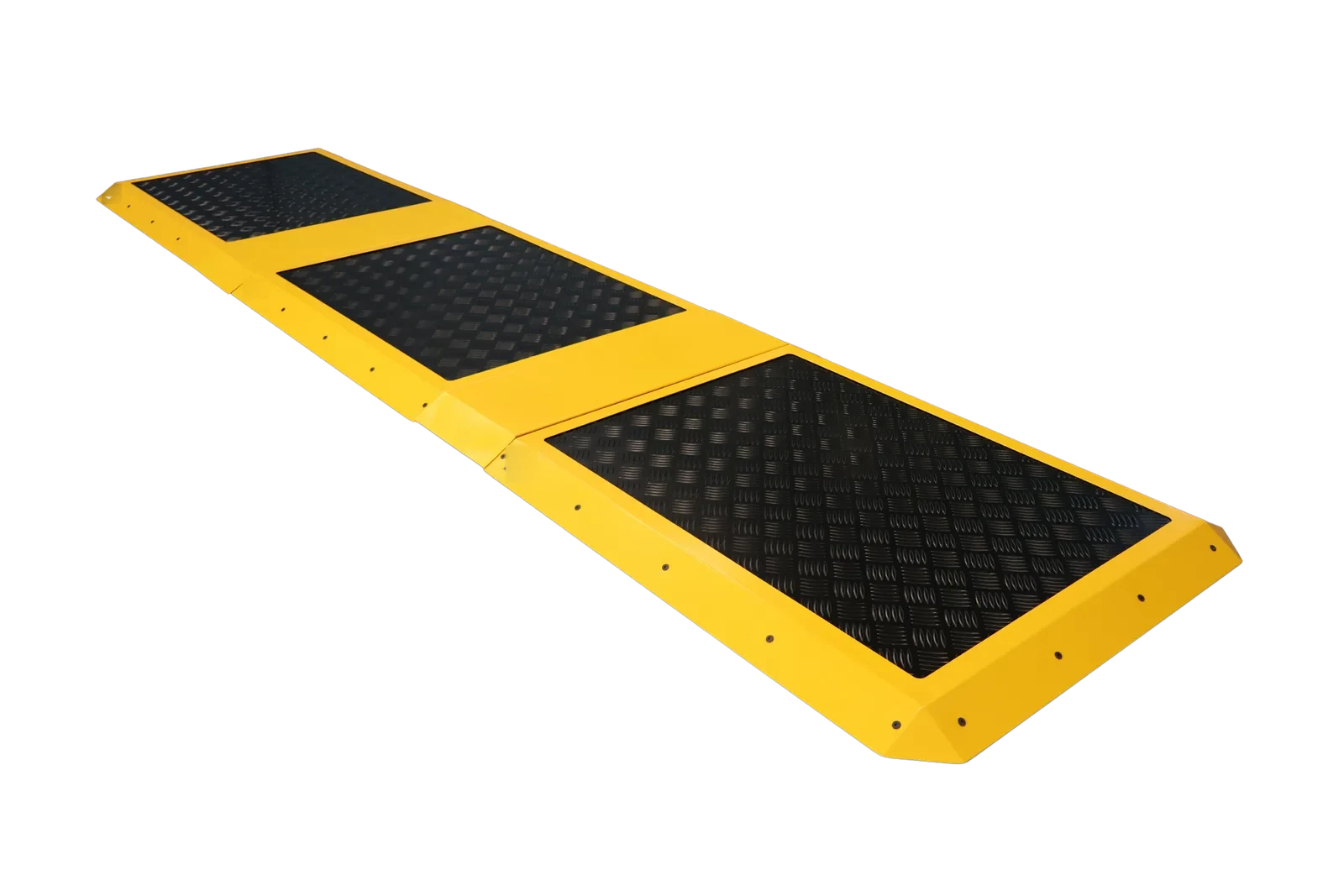
A heated standing mat such as M-Heat is one way to provide local heating at a workstation. It draws a maximum of 350 W, plugs into a standard socket, and up to five mats run from one socket along a line. Because it also raises the worker off cold concrete, it tackles the cold floor that draws heat out through the feet all shift.
For a fuller list of options, including draught control and rotas, see our guide on how to keep warehouse workers warm without heating the whole building.
Key Points
- There is no single legal minimum temperature, but indoor workplaces must be reasonable.
- HSE guidance says at least 16 °C, or 13 °C for severe physical work.
- Where that is not practical, employers should take reasonable steps such as local heating at workstations, protective clothing and limiting exposure.
- Assess cold as a risk, focusing on static workstations and areas near doors.
If you are planning local heating for a line of workstations, send us your layout and we will recommend how many M-Heat mats you need and quote the full run.