Insights
Sustainable Industrial Matting: The Complete Procurement Guide for ESG-Conscious Buyers
Guide to sustainable industrial matting: recycled content, UK manufacturing, ISO 14001 certification, and ESG-compliant procurement for facilities managers.

Why Sustainability Matters in Industrial Matting Procurement
For facilities managers and procurement teams across UK manufacturing, logistics, and food production, industrial matting is essential. Anti-fatigue mats protect workers. Drainage systems maintain hygiene. Anti-slip surfaces prevent accidents. But now there is another key factor: environmental impact.
With ESG requirements tightening in 2026, procurement decisions face greater scrutiny. The Plastic Packaging Tax now charges £228.82 per tonne for plastic products with less than 30% recycled content. Extended Producer Responsibility (EPR) schemes are growing. Tender processes for public and private contracts now require documented sustainability credentials.
For sustainable industrial matting, this creates both a challenge and an opportunity. The challenge: ensuring your flooring choices align with corporate sustainability goals. The opportunity: UK manufacturers now offer 100% recycled, locally produced solutions. These outperform imported alternatives on both performance and environmental metrics.
The Hidden Carbon Footprint of Imported Matting
When procurement teams compare suppliers, price per square metre often dominates. But this narrow focus hides a major environmental cost: the carbon footprint of imported products.
Consider the journey of a typical imported mat. Raw materials are extracted in one country, processed in another, manufactured in a third (often China or Eastern Europe), then shipped thousands of miles before final distribution. According to the Carbon Trust, optimising supply chains can lower emissions by up to 30%.
UK-manufactured sustainable industrial matting eliminates much of this carbon burden. When production happens locally, transport emissions drop sharply. For organisations tracking Scope 3 emissions, this difference matters.
The Made in Britain campaign notes that UK-made products deliver “drastic reduction in transport-related carbon emissions.” For facilities managers under pressure to show carbon reduction, locally manufactured matting is an obvious choice.
Recycled Content: The 100% Solution
Not all recycled content is equal. Some manufacturers claim “recycled materials” while using small percentages. Others rely on post-industrial waste rather than genuine post-consumer recycling. Understanding these differences is essential.
Post-Consumer vs Post-Industrial Recycling
Post-consumer recycled content comes from products that have finished their lifecycle: used packaging, end-of-life flooring, discarded components. This represents true circular economy principles, diverting waste from landfill.
Post-industrial recycling uses manufacturing scrap and offcuts. While better than virgin materials, it is efficiency optimisation rather than waste reduction.
The most sustainable industrial matting uses high percentages of post-consumer recycled PVC. Products made from 100% recycled PVC represent the gold standard. This is especially true when that recycling happens in the UK.
PVC Recyclability and Circular Design
PVC is one of the most recyclable plastics. It can be recycled up to seven times without major material loss. The European PVC industry has established extensive collection and recycling infrastructure.
For sustainable industrial matting, this recyclability matters at both ends of the product lifecycle. Mats made from recycled PVC reduce demand for virgin materials. When those mats reach end of life, they can be recycled into new products. This is a true circular economy model.
Leading manufacturers now offer take-back programmes. When specifying matting, ask: what happens when this product wears out?
UK Manufacturing: Beyond Carbon Benefits
Choosing UK-manufactured sustainable industrial matting delivers advantages beyond reduced transport emissions.
Supply Chain Resilience
The pandemic exposed the fragility of international supply chains. Lead times for imported products stretched from weeks to months. UK manufacturers maintained more reliable delivery through domestic sourcing and shorter distribution networks.
For facilities managers running continuous production, matting replacement cannot wait months. Local manufacturing provides supply chain security.
Quality Control and Consistency
UK manufacturing facilities operate under British and European standards. ISO 14001 certified manufacturers demonstrate documented environmental management systems, audited by independent bodies.
Products manufactured offshore may meet stated specifications, but verification is harder. Quality variation is difficult to address when the factory is 6,000 miles away.
Economic Sustainability
Supporting UK manufacturing creates domestic jobs and tax revenue. For organisations with social responsibility commitments, this economic dimension matters alongside environmental factors.
Key Standards and Certifications
When evaluating sustainable industrial matting suppliers, several standards provide objective verification.
ISO 14001: Environmental Management Systems
ISO 14001 certification shows a manufacturer operates an audited environmental system. This covers resource efficiency, waste reduction, pollution prevention, and continuous improvement.
Over 250,000 organisations hold this certification. It provides assurance that environmental claims are backed by systematic processes rather than marketing.
Material Content Verification
Recycled content claims should be verifiable. Ask suppliers for documentation of percentages and material sources. Post-consumer recycled content from domestic sources represents the strongest credentials.
Fire and Safety Standards
Sustainable industrial matting must still meet functional requirements. Look for compliance with:
- EN 13501-1: Fire classification for construction products
- BS 7050: Slip resistance testing
- IEC 61340: Electrostatic properties for ESD matting
For environments requiring oil resistant matting, ensure chemical resistance ratings match your application needs.
Environmental credentials should complement, not replace, performance specifications.
ESG Compliance and Procurement Documentation
Industrial buyers must now document the sustainability credentials of their purchases. This is driven by regulations and customer expectations.
Plastic Packaging Tax Implications
The UK Plastic Packaging Tax applies to products with less than 30% recycled content, at £228.82 per tonne from April 2026. While matting itself is not packaging, the tax signals broader regulatory direction.
Procurement teams anticipating future regulations are specifying high recycled content across all plastic products, including industrial flooring.
Supply Chain Due Diligence
ESG reporting frameworks require assessment of sustainability practices across supply chains. For procurement, this means maintaining documentation: certifications, recycled content verification, carbon data, and environmental policies.
Tender Requirements
Public sector and many private tenders now include sustainability scoring. Showing that products meet environmental standards provides competitive advantage.
Practical Specification Guide for Sustainable Matting
When specifying sustainable industrial matting, use this framework:
Material Composition
| Criterion | Minimum Standard | Best Practice |
|---|---|---|
| Recycled content | 30%+ | 100% recycled |
| Material source | Post-industrial | Post-consumer |
| Material origin | Any | Domestic UK |
Manufacturing
| Criterion | Minimum Standard | Best Practice |
|---|---|---|
| ISO 14001 | Recommended | Required |
| Location | Europe | UK |
| Energy source | Grid standard | Renewable |
Lifecycle
| Criterion | Minimum Standard | Best Practice |
|---|---|---|
| Lifespan | 5+ years | 10+ years |
| End-of-life | Recyclable | Take-back programme |
| Replacement | Full replacement | Modular tiles |
Functional Requirements
Sustainability should layer onto existing requirements, not replace them. Ensure products meet:
- Slip resistance ratings (R10+ for wet areas)
- Anti-fatigue properties for standing workstations
- Chemical and oil resistance for engineering sites
- Fire classification per building regulations
- ESD properties for electronics manufacturing
The Business Case for Sustainable Matting
Beyond compliance, sustainable industrial matting often delivers commercial benefits.
Durability and Total Cost of Ownership
High-quality recycled PVC matting often outperforms cheaper virgin alternatives on durability. Longer lifespan means lower replacement frequency, less disruption, and better total cost.
Worker Wellbeing and Productivity
Anti-fatigue matting reduces musculoskeletal disorders and absenteeism. The HSE estimates these disorders cost UK employers over £500 million annually. Matting performance directly impacts business outcomes.
Brand and Stakeholder Perception
For organisations with public sustainability commitments, procurement choices matter. Showing that industrial products align with environmental values supports broader corporate messaging.
Choosing a Sustainable Matting Supplier
When evaluating suppliers, ask:
-
What percentage of recycled content does your matting contain? Look for specific numbers.
-
Is that post-consumer or post-industrial recycled material? Post-consumer is stronger.
-
Where is the matting manufactured? UK production cuts transport emissions.
-
Do you hold ISO 14001 certification? Independent verification matters.
-
What end-of-life options do you offer? Take-back shows commitment.
-
Can you provide carbon footprint data? Required for ESG reporting.
Looking Forward: Sustainable Industrial Flooring in 2026
Regulatory pressure on sustainable procurement will keep increasing. EPR schemes expanding in 2026 place greater responsibility on manufacturers for product end-of-life. Plastic regulations may tighten further.
For facilities managers, now is the time to establish sustainable sourcing relationships. Suppliers offering 100% recycled, UK-manufactured sustainable industrial matting provide both environmental credentials and supply chain security.
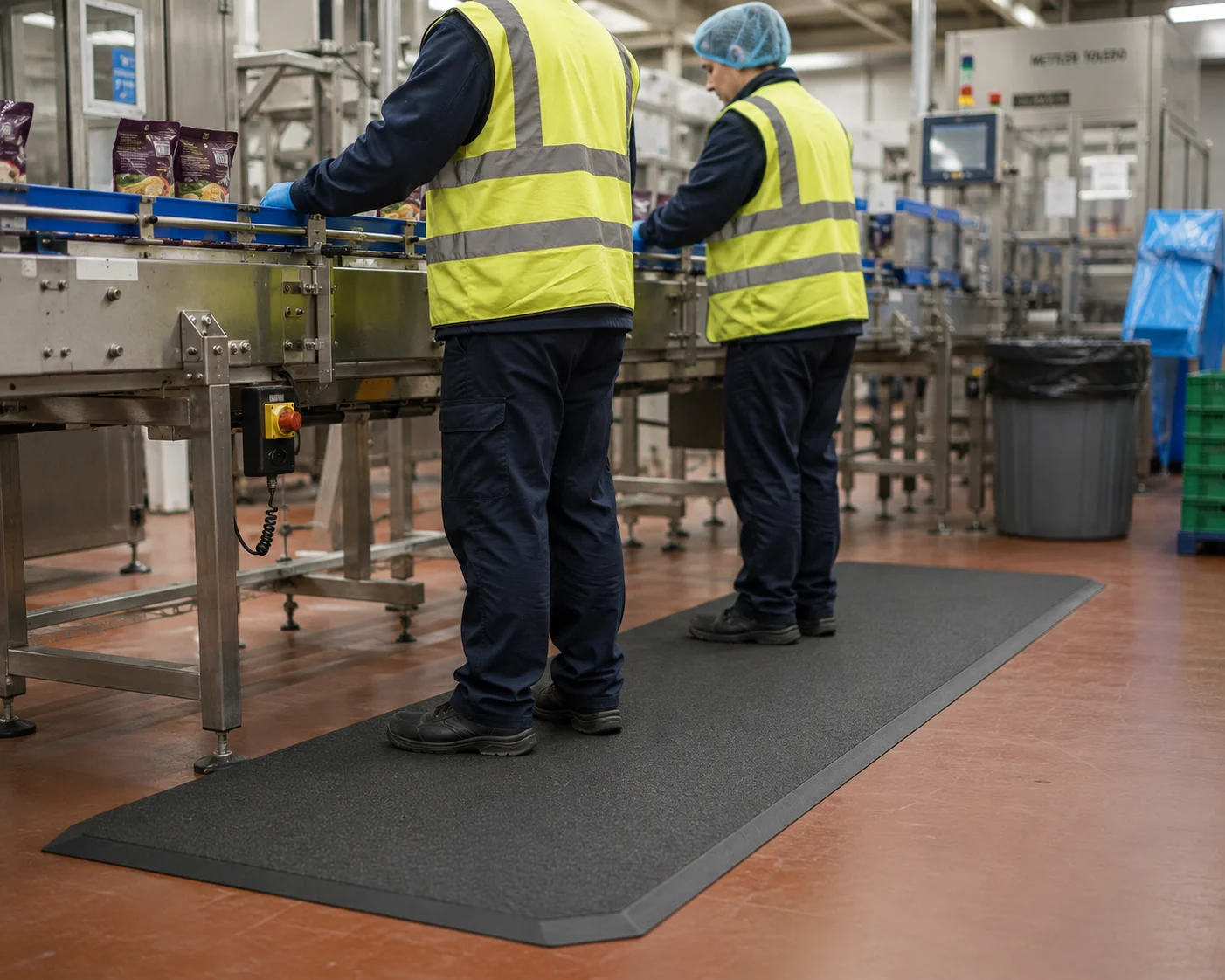
The M5 range from Maximum Matting shows this approach: manufactured in the UK from 100% recycled PVC, available in anti-fatigue, drainage, ESD, and antimicrobial configurations. These products deliver the performance industrial environments demand while meeting sustainability standards.
Sustainable industrial matting is not about compromise. It is about choosing products that protect workers, perform reliably, and show environmental responsibility. For ESG-conscious buyers, that combination is now available from UK manufacturers committed to circular economy principles.