SAFE-FLEX INSIGHTS
Oil-Resistant Workshop Matting: The Complete Specification Guide for Automotive and Engineering Environments
Specification guide to oil-resistant workshop matting for automotive garages and CNC shops. Covers nitrile rubber, R-ratings, and HSE compliance.
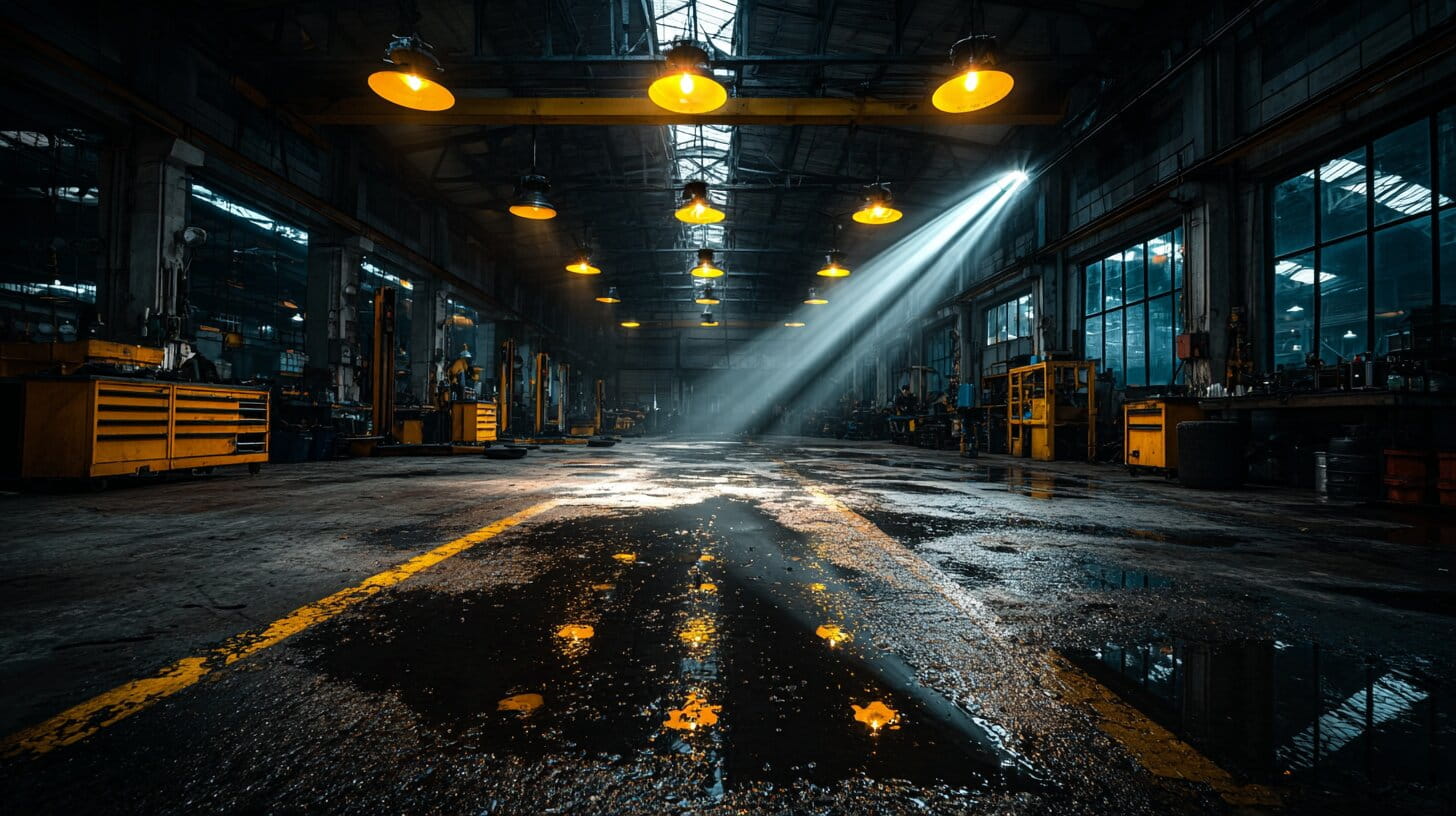
In automotive garages, CNC machine shops, and engineering workshops across the UK, floor contamination is constant. Cutting oils, hydraulic fluids, coolants, and lubricants create hazardous surfaces. Standard matting cannot handle these conditions. For facilities managers and safety officers, understanding oil resistant matting UK specifications is essential.
This guide covers how to specify the right workshop matting for your environment. You will learn about nitrile rubber composition, slip resistance ratings, HSE compliance, and installation options.
Why Standard Matting Fails in Workshop Environments
Workshop floors face contamination challenges that destroy conventional rubber matting within months. Standard natural rubber and SBR compounds swell and degrade when exposed to petroleum-based oils. They lose structural integrity when in contact with hydraulic fluids and cutting coolants.
The consequences extend beyond replacing mats:
- Slip hazards: Degraded matting loses surface texture and becomes slippery when oily
- Trip risks: Swelling creates uneven surfaces and curling edges
- Compliance failures: Damaged matting no longer meets slip resistance specifications
- Cross-contamination: Absorbed oils can leach onto floors during cleaning
The HSE identifies floor contamination as a primary slip risk in engineering workshops. Case studies show that proper matting, combined with good housekeeping, can reduce slip accidents by up to two-thirds.
Understanding Nitrile Rubber: The Standard for Oil Resistance
Nitrile rubber matting (NBR) is the gold standard for oil-resistant industrial flooring. Unlike natural rubber, nitrile contains acrylonitrile. This compound provides excellent resistance to petroleum products, greases, and industrial chemicals.
Nitrile Content and Performance
Not all nitrile rubber matting is equal. The percentage of nitrile affects oil resistance:
| Nitrile Content | Oil Resistance | Typical Applications |
|---|---|---|
| 30-35% | Moderate | Light industrial, occasional oil exposure |
| 40-50% | Good | Automotive workshop flooring, general engineering |
| 60-70% | Excellent | CNC machine shop flooring, heavy oil exposure |
| 100% | Maximum | Transformer rooms, constant oil immersion |
For most automotive and engineering workshops, 40-50% nitrile content works best. It balances oil resistance, durability, and cost. Facilities with constant coolant exposure should consider higher nitrile content.
Temperature Performance
Nitrile rubber works well from -40°C to +90°C. This suits workshops with seasonal temperature changes or heat from machinery. For hot works areas with sparks or weld spatter, you need fire-resistant matting to EN 13501-1.
Slip Resistance Ratings: What R-Values Mean
Slip resistance is measured using the DIN 51130 ramp test. This assigns R-ratings from R9 (lowest) to R13 (highest). This German standard is widely used across Europe and referenced by the HSE.
DIN 51130 R-Rating Classifications
| R-Rating | Inclination Angle | Recommended Environment |
|---|---|---|
| R9 | 6° to 10° | Dry internal areas only |
| R10 | 10° to 19° | Wet areas, light contamination |
| R11 | 19° to 27° | Oily areas, commercial kitchens |
| R12 | 27° to 35° | Heavy oil, industrial workshops |
| R13 | Above 35° | Maximum slip risk areas |
For automotive and engineering workshops, R11 is the minimum rating. R12 is better for areas with heavy fluid exposure. R9 or R10 rated flooring will be dangerous when contaminated with oils or coolants.
Pendulum Test Values (PTV)
The UK HSE also uses Pendulum Test Values for slip resistance. A PTV of 36 or above is low slip risk in dry conditions. Contaminated floors need PTV 45 or higher for adequate grip. Always ask for both R-rating and PTV data when specifying oil resistant anti fatigue mats.
Key Specifications for Workshop Matting
Consider these parameters when specifying workshop matting:
Thickness and Anti-Fatigue Properties
Workshop staff often stand for hours at workbenches and assembly stations. The HSE reports that MSDs account for 27% of work-related ill health. Over 500,000 UK workers are affected annually.
Anti-fatigue matting reduces strain on legs, feet, and back. It encourages subtle muscle movements that improve blood flow. Effective matting ranges from 9mm to 15mm:
- 9-10mm: Basic fatigue relief for moderate standing time
- 12-15mm: Enhanced cushioning for prolonged standing at workstations
- 15mm+: Maximum comfort, but may feel unstable for precision tasks
Surface Texture and Design
Workshop matting must balance slip resistance with easy cleaning:
- Solid top: Easier to clean, good where debris must not accumulate
- Drainage holes: Let fluids pass through, preventing pooling
- Raised studs: Provide grip while allowing some fluid flow
- Ribbed patterns: Channel fluids away, common in roll formats
For CNC machine shop flooring with constant coolant and swarf, drainage matting prevents standing fluid. However, drainage designs need more frequent cleaning underneath.
Chemical Resistance Beyond Oils
Workshops use more than petroleum lubricants. Your specification should consider:
- Metalworking coolants: Water-soluble emulsions that can harbour bacteria
- Hydraulic fluids: Mineral, synthetic, or water-glycol types
- Cleaning solvents: Degreasers and industrial cleaners
- Cutting oils: Neat, semi-synthetic, or fully synthetic
Quality nitrile rubber matting resists most workshop chemicals. Always verify compatibility with specific substances used in your facility.
Installation Options: Roll vs Interlocking Tiles
Workshop matting comes in two main formats:
Roll Matting
Advantages:
- Seamless coverage reduces trip edges
- Lower cost per square metre for large areas
- Simpler installation in rectangular spaces
- Fewer joints for contamination to enter
Considerations:
- Heavy rolls need equipment to move
- Hard to cut around machinery
- Damaged sections need full roll replacement
- May curl at edges without proper fixing
Interlocking Tiles
Advantages:
- Modular installation around equipment
- Individual tiles replaceable if damaged
- Easy to lift for cleaning underneath
- Portable as needs change
Considerations:
- Joints create potential trip edges (bevelled edges essential)
- Higher cost per square metre
- More complex in irregular spaces
- Joints may let fluid reach the subfloor
For automotive workshops with hoists and inspection pits, tiles offer flexibility. Production lines with static stations often suit roll matting better.
HSE Compliance and Legal Requirements
The Workplace Regulations 1992, Regulation 12, requires suitable floors. They must be maintained well and free from slip hazards. Employers must assess floor contamination risks and use proper controls.
For detailed standards, see our guide to BS 7953 Industrial Matting requirements.
Key compliance points:
- Risk assessment: Document slip hazards and controls, including matting specs
- Maintenance schedules: Set cleaning and inspection routines
- Replacement criteria: Define when to replace worn or damaged matting
- Training: Ensure workers know spill procedures and mat handling
Slip, trip, and fall accidents account for 30% of workplace injuries under RIDDOR. The costs include compensation, lost time, and enforcement action. Proper engineering workshop safety matting is both a legal duty and good business.
Application-Specific Recommendations
Automotive Workshops and Garages
Primary contaminants: Engine oil, transmission fluid, brake fluid, coolant, degreasers
Recommended specification:
- Nitrile rubber (40%+ content)
- R11 or R12 slip resistance
- 12mm thickness for anti-fatigue
- Solid top or shallow drainage
- Bevelled edges on exposed sides
CNC Machine Shops
Primary contaminants: Metalworking coolant, cutting oil, hydraulic fluid, swarf
Recommended specification:
- High nitrile content (50%+)
- R12 slip resistance minimum
- Drainage holes for coolant
- Modular tiles for easy cleaning
- Chemical resistance verified for your coolants
General Engineering Workshops
Primary contaminants: Mixed lubricants, hydraulic fluids, cleaning solvents
Recommended specification:
- Nitrile or nitrile-blend rubber
- R11 minimum, R12 for wet areas
- 10-12mm thickness
- Consider zone-specific matting types
Cost Justification and ROI
Quality workshop matting costs more upfront but delivers clear returns:
Reduced accidents: Each slip injury costs £8,000-£15,000 in direct costs. This includes treatment, compensation, and investigation time. Indirect costs add more.
Longer service life: Proper oil-resistant matting lasts 5-10 years in harsh conditions. Standard materials last only 1-2 years.
Better productivity: Anti-fatigue properties reduce discomfort and MSDs. Over 6 million working days are lost to MSDs annually. Even modest comfort improvements boost output.
Compliance confidence: Documented matting shows due diligence in slip risk management.
When considering your options, look at sustainable industrial matting choices that meet ESG requirements while delivering performance.
Selecting the Right Supplier
When buying workshop matting, look for suppliers who provide:
- Technical data sheets with nitrile content percentages
- Independent slip test certificates (DIN 51130 or pendulum)
- Chemical resistance charts for workshop substances
- Application-specific advice for your environment
- Sample materials for testing
- Installation guidance and accessories
UK-made matting, such as Safe-Flex products from 100% recycled PVC, offers quality with shorter lead times. It also has a lower carbon footprint than imports.
Conclusion
Oil-resistant workshop matting is essential for automotive garages, engineering workshops, and manufacturing facilities. Floor contamination is inevitable in these environments. By understanding nitrile rubber specs, slip ratings, and application needs, you can specify matting that protects workers and ensures compliance.
The key is matching specifications to your contaminants, work patterns, and installation needs. A well-specified matting system transforms hazardous floors into safe, comfortable workspaces that support productivity and wellbeing.
Ready to upgrade your facility?
Get expert advice on your matting requirements
Our team can help you specify the right matting for your application, whether it's ESD protection, anti-fatigue, or slip resistance. All products are UK-manufactured from recycled materials.