SAFE-FLEX INSIGHTS
Kitchen Anti-Fatigue Mats: Do They Actually Work?
Honest look at whether anti-fatigue mats are worth it for home kitchens. We cover the science, the hype, and what to look for if you decide to buy one.
- anti-fatigue
- kitchen
- stand-safe
- home
The Short Answer
Yes, anti-fatigue mats work. But not all of them, and not the cheap ones.
If you stand on hard kitchen flooring for more than 20-30 minutes at a time, a proper anti-fatigue mat will reduce foot, leg, and lower back fatigue. The key word is “proper.” The thin decorative mats sold as kitchen accessories do very little. The industrial-grade mats used in factories and commercial kitchens do a lot.
If you want the broader commercial buying framework behind that recommendation, see our anti-fatigue matting UK guide.
Let’s look at why.
Why Hard Kitchen Floors Cause Pain
The most popular kitchen flooring in the UK — porcelain tile, natural stone, slate, and concrete — shares one characteristic: zero give. When you stand on these surfaces, your body absorbs every micro-impact from shifting weight, adjusting balance, and simply supporting itself against gravity.
Over 20-30 minutes, your leg muscles work harder to maintain stability. Your lower back compensates. Your feet compress against an unyielding surface. The result is the familiar ache you feel after cooking a Sunday roast or prepping for a dinner party.
This isn’t speculation. Research into occupational standing fatigue — studied extensively because factory workers, nurses, and retail staff face the same problem — consistently shows that prolonged standing on hard surfaces increases:
- Lower back muscle fatigue
- Leg swelling and discomfort
- Foot pain and plantar pressure
- Overall subjective fatigue ratings
The same science applies whether you’re standing at an assembly line or standing at your kitchen worktop. The floor doesn’t know the difference.
How Anti-Fatigue Mats Actually Work
Anti-fatigue mats work through two mechanisms:
1. Cushioning absorption
The mat’s material compresses slightly under your weight, absorbing impact that would otherwise transfer through your feet and into your joints. This reduces the cumulative stress on your musculoskeletal system.
2. Micro-instability
A slightly yielding surface causes your body to make constant small adjustments in posture and weight distribution. These micro-movements promote blood flow in your legs and prevent the static muscle loading that causes fatigue. It’s the same reason standing still is more tiring than walking — movement keeps blood flowing.
The combination means your muscles work less, your circulation improves, and you can stand comfortably for significantly longer.
Why Most Kitchen Mats Don’t Work
Here’s where the market fails consumers. Search for “kitchen mat” online and you’ll find hundreds of options between £10 and £30. Most are:
- Too thin (3-8mm): Insufficient material to provide meaningful cushioning. You can feel the hard floor through them within minutes.
- Made from decorative fabric or thin foam: Looks nice, provides almost no anti-fatigue benefit.
- Lightweight: Slides around on tile and laminate floors, creating a trip hazard rather than solving a comfort problem.
- Short-lived: Whatever minimal cushioning they offer compresses out within a few months of regular use.
These mats are designed to be kitchen accessories — they protect your floor from dropped utensils and add a splash of colour. They are not anti-fatigue mats.
What Makes an Anti-Fatigue Mat Actually Effective
Based on occupational health research and industrial matting standards, effective anti-fatigue mats share these characteristics:
Thickness: 15-20mm minimum
Below 15mm, there isn’t enough material to provide meaningful cushioning. The sweet spot for kitchen use is 15-20mm — thick enough to absorb impact, thin enough not to create a trip hazard.
Quality materials that maintain cushioning
The material matters as much as the thickness. Industrial-grade PVC, rubber, and quality polyurethane maintain their cushioning properties for years. Budget foam compresses and loses effectiveness within months.
A simple test: press your thumb firmly into the mat and release. A good mat springs back immediately. A cheap mat stays compressed.
Sufficient weight
An anti-fatigue mat needs to stay where you put it. Lightweight mats slide on smooth kitchen floors, which is both annoying and dangerous. Look for mats weighing 5kg or more — gravity is the most reliable non-slip mechanism.
Appropriate size
You don’t stand perfectly still while cooking. You shift, reach, and move along the worktop. A mat that’s too small forces you to stand rigidly in one spot, defeating the purpose. Look for at least 60cm x 90cm for a single standing position.
The Industrial Secret
Here’s something most kitchen mat shoppers don’t know: the best anti-fatigue mats aren’t designed for kitchens at all. They’re designed for factories.
Manufacturing facilities have solved the standing fatigue problem decades ago. Workers on production lines, assembly stations, and packing areas stand for 8-12 hour shifts. The anti-fatigue mats in these environments are engineered to maintain comfort across entire working days, year after year.
The same technology works brilliantly in home kitchens. The only reason it hasn’t crossed over more is marketing — industrial mat companies sell to factories, kitchen mat companies sell to homeowners, and the two worlds rarely meet.
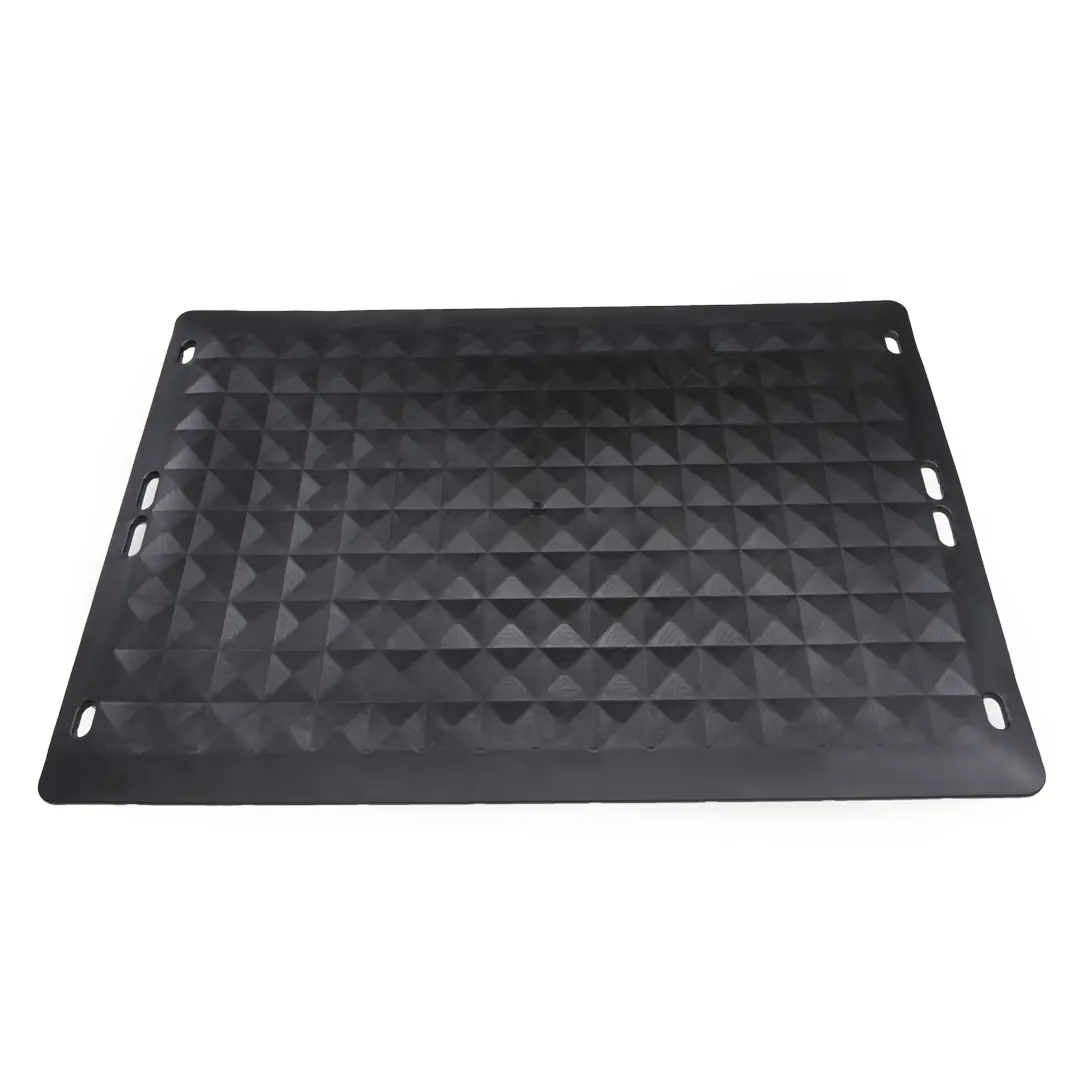
Products like Stand-Safe from Ergo Advantage bridge this gap. They use industrial-grade materials and 20mm cushioning but in a size (71 x 102cm) and at a price point (from £81) that makes sense for home use.
What About Gel Mats?
Gel mats (like GelPro) are popular in the US market and increasingly available in the UK. They use a gel core for cushioning and typically cost £80-120.
Gel mats offer good initial comfort but have some limitations:
- Gel can feel unstable to some users
- Temperature sensitivity — gel can harden in cold kitchens
- Durability concerns with the gel core over time
- Often heavier than necessary
They’re a valid option, but industrial-grade foam and PVC mats tend to offer more predictable, consistent performance across a wider range of conditions.
Do You Actually Need One?
Be honest about your kitchen habits:
You probably need one if:
- You cook most days and spend 30+ minutes standing at the worktop
- Your kitchen has tile, stone, slate, or concrete flooring
- You notice foot, leg, or back fatigue after cooking
- You have existing back or joint conditions aggravated by standing
- You enjoy baking or entertaining, which means extended standing time
You probably don’t need one if:
- You rarely cook or spend minimal time standing in the kitchen
- Your kitchen has cushioned vinyl or thick carpet (rare but exists)
- You wear supportive shoes while cooking
- You have no issues with standing comfort
What to Look for When Buying
If you’ve decided an anti-fatigue mat is worth trying, here’s a quick checklist:
- Thickness: 15-20mm. Not 5mm. Not 8mm. At least 15mm.
- Weight: 5kg+ so it stays put on smooth floors.
- Material: Industrial-grade PVC, rubber, or quality polyurethane. Not decorative foam.
- Size: At least 60 x 90cm for a single position.
- Durability: Look for products designed for commercial or industrial use — they’re built to maintain cushioning under heavy daily use.
- Easy cleaning: Kitchen mats will see food debris, spills, and cleaning products. They need to handle this without deteriorating.
Our Recommendation
We make Stand-Safe anti-fatigue mats specifically for this use case. 20mm of industrial-grade cushioning, 71 x 102cm, weighing 6.6kg. Available in standard (£81) and antimicrobial (£94.50) versions.
We’re obviously biased, but we’ll also say this: any proper anti-fatigue mat is better than the thin decorative mats most people currently use. If you try a quality mat from any manufacturer and it doesn’t make a noticeable difference within the first week, something is wrong.
If you are comparing more industrial or workplace-focused options rather than home-kitchen mats alone, use our anti-fatigue matting UK guide to compare materials, drainage formats, and factory-grade specifications.
Request a free sample to feel the difference before buying.
The Bottom Line
Anti-fatigue mats work — the science is clear and decades of industrial use prove it. But the kitchen mat market is flooded with products that look the part without delivering the function. Spend more than £20, look for genuine thickness and weight, and choose materials designed for sustained standing. Your feet will notice immediately.
Ready to upgrade your facility?
Get expert advice on your matting requirements
Our team can help you specify the right matting for your application, whether it's ESD protection, anti-fatigue, or slip resistance. All products are UK-manufactured from recycled materials.